ΔΙΕΘΝΗΣ ΕΛΛΗΝΙΚΗ ΗΛΕΚΤΡΟΝΙΚΗ ΕΦΗΜΕΡΙΔΑ ΠΟΙΚΙΛΗΣ ΥΛΗΣ - ΕΔΡΑ: ΑΘΗΝΑ

Ει βούλει καλώς ακούειν, μάθε καλώς λέγειν, μαθών δε καλώς λέγειν, πειρώ καλώς πράττειν, και ούτω καρπώση το καλώς ακούειν. (Επίκτητος)

(Αν θέλεις να σε επαινούν, μάθε πρώτα να λες καλά λόγια, και αφού μάθεις να λες καλά λόγια, να κάνεις καλές πράξεις, και τότε θα ακούς καλά λόγια για εσένα).

Εμφάνιση αναρτήσεων με ετικέτα EU. Εμφάνιση όλων των αναρτήσεων

Τρίτη 17 Ιανουαρίου 2023

EU Must ‘Prepare Better’ to Deal with Future Travel Crises


The European Union has been urged to “prepare itself better” for potential future emergencies following a review of the digital tools used to allow travel during the COVID-19 pandemic.

Δευτέρα 5 Δεκεμβρίου 2022

43% of tourism nights spent in EU countries last year occurred in July & August


A total of 43 per cent of all tourism nights spent in European Union countries last year occurred in July and August, the recent figures provided by the European Office for Statistics, Eurostat.

Τρίτη 1 Φεβρουαρίου 2022

Τετάρτη 2 Ιουνίου 2021

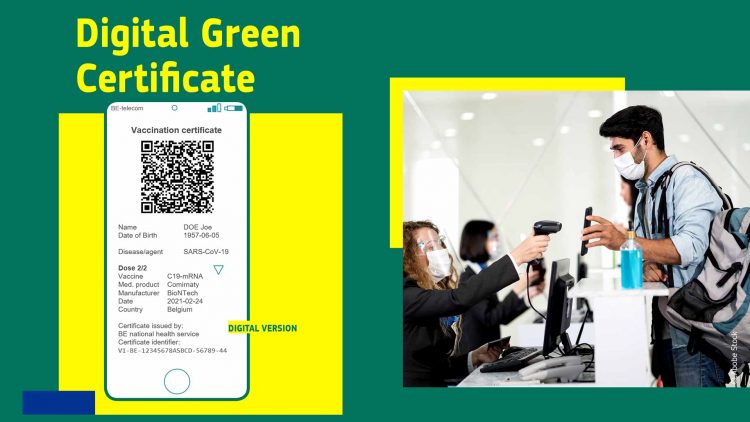
EU Digital COVID Certificate Goes Live

On June 1, the EU Digital COVID Certificate has reached another important milestone with the go-live of the technical system at the EU level, which allows to verify certificates in a secure and privacy-friendly way.

Παρασκευή 26 Μαρτίου 2021

European Parliament fast-tracks procedure to adopt Digital Green Certificate by June


To facilitate its adoption by the summer, MEPs decided to accelerate the approval of the Digital Green Certificate, allowing for safe and free movement during the pandemic.

With 468 votes in favour, 203 against and 16 abstentions, MEPs supported using the urgency procedure (Rule 163), which allows for faster parliamentary scrutiny of the Commission’s proposals, while fully respecting its democratic prerogatives.

Δευτέρα 1 Μαρτίου 2021

Europe’s travel & tourism sector calls on EU governments to chart restart plan in time for summer


The European Tourism Manifesto Alliance, a group of more than 60 public and private travel and tourism organisations and the voice of the sector in Europe,  unveiled a series of joint recommendations for EU Member States on how to relaunch travel and tourism in Europe in time for summer 2021.

Δευτέρα 29 Ιουνίου 2020

EU likely to reopen borders to 14 countries in July


Coronavirus: EU set to reopen borders to 14 countries on 1 July


The external border of the European Union is expected to begin reopening by July 1. In light of the decision, the EU drafted a list of the countries with a better epidemiological situation in order to allow citizens of those countries to enter Europe by the end of next week. As of now, the EU is likely to reopen its borders to 14 countries including Australia, Canada, South Korea, Japan, New Zealand, Rwanda, Thailand, Uruguay, Algeria, Morocco, Tunisia, Georgia, Montenegro, and Serbia.

However, according to reports, EU officials failed to agree on a common list of the countries that would certainly be restricted from entering the block upon the reopening of the border. But sources has also confirmed that citizens of Brazil, Qatar, the U.S. and Russia would not be provided access to EU borders and can only enter Europe at a later date when the epidemiological situation of the respective countries shows an improvement. The United States is the worst-affected country in the world at present.

On the other hand, it has been decided that travellers from China would be given permission to enter the European premises only if China would provide allowance to European citizens to enter their country. Some EU countries have already requested a delay in the decision for further examination leaving the chances of a revised list open.

The current list is not entirely binding and border management continues to remain a matter of national decision. Moreover, the document is yet to be formally agreed by the Council of the European Union and final decision is likely to arrive this week. The EU Commission has considered objectives like the epidemiological situation and coronavirus response of a particular country, its ability to apply containment measures during travel and the country’s border restrictions towards EU while drafting the list.

Based on these conditions, the Commission has mentioned that the citizens of the six Western Balkan countries might be the first to benefit from the abolishment of travel restrictions. It has also recommended the Member States to consider allowing third-country nationals to enter the EU from July 1 after analysing the epidemiological situation in each third-country.


Πέμπτη 13 Φεβρουαρίου 2020

Travel industry booms with European stocks reaching record height


Αποτέλεσμα εικόνας για European stocks reaching record height


On Tuesday, European stocks bounced back to a record high in a broad-based advance, with travel industry rallying as tour operator Tui illustrated the way it has gained an advantage from the fall down of a rival.

The Stoxx Europe 600 SXXP, +0.37%  raised 0.9% to 428.47. The previous record closing high was set on Feb. 6 at 425.49.

Also, the German DAX DAX, +0.64%, which gained 1% to 13627.84, reached a new record.

On Tuesday, the U.S. stocks increased as Fed Chairman Jerome Powell struck what analysts explained was a careful tone in Congress testimony. “The remarks support the belief that the virus developments reinforce low-for-longer on rates with some increased possibility of further rate cuts – a belief that has helped support risky assets through the virus shock to date,” said Krishna Guha of Evercore ISI.

Tui shares TUI, -0.14%  increased 13.1% after the Anglo-German tour operator modestly narrowed its fiscal first-quarter loss, mentioning that it witnessed booking trends and lifting its revenue outlook. Now, the travel and tourism company explained that it expects high single-digit revenue growth for the year in its markets and airlines business against previous guidance of mid-to-high single-digit revenue growth. Without mentioning Thomas Cook by name, Tui said it benefited from “the insolvency of a key competitor.”

Other travel companies rose as well. Air France-KLM AF, +2.51%  rose 4.7% and International Consolidated Airlines Group IAG, +1.37%  rose 3.8%.

Deutsche Telekom DTE, +0.45%  shares increased 3.6% as a judge approved the union of T-Mobile US TMUS, +11.78%  and Sprint S, +77.50%  on Tuesday. Deutsche Telekom holds 63% of T-Mobile US.


Παρασκευή 7 Φεβρουαρίου 2020

EU Updates Visa Rules and Visa Fee


Αποτέλεσμα εικόνας για EU Updates Visa Rules and Visa Fee


New EU rules on short-stay visas are now in effect as of February 2, 2020. The new Schengen rules make it easier for legitimate travellers to apply for a visa to come to Europe. Besides the rules, the visa fee also increased.
The visa fee increases from €60 to €80. This increase is the first one since 2006.
The changes apply to travellers from all countries which need visas to travel to the EU. Currently, citizens from 105 non-EU countries or entities are required to have a visa. Nothing changes for countries benefitting from visa-free travel to the EU because the new rules do not apply to their citizens.
The rules cover short-stay visas for the 22 EU countries that are part of the Schengen area (Austria, Belgium, Czechia, Denmark, Estonia, Finland, France, Germany, Greece, Hungary, Italy, Latvia, Lithuania, Luxembourg, Malta, the Netherlands, Poland, Portugal, Slovakia, Slovenia, Spain and Sweden), as well as for four associated countries: Iceland, Liechtenstein, Norway and Switzerland.A uniform short-stay visa issued by one of these countries covers travel throughout the 26 Schengen countries for up to 90 days in any 180-day period.
With the new rules, travellers now benefit from a simpler and more user-friendly visa application procedure:
  • Visa applications can be submitted up to 6 months before the intended travel (9 months for seafarers), instead of 3 months previously, allowing travellers to better plan their trips;
  • Multiple-entry visas with long validity (from 1 to 5 years) are now easier to obtain, saving frequent travellers time and money, as they will have to apply for a new visa less often;
  • In most cases, an application can be submitted directly in the traveller's country of residence, and where possible filled in and signed electronically (only hard copies were accepted until now), which will also save travellers time, money and hassle.
What are the new rules for issuing multiple-entry visas?
Frequent travellers with a positive visa history are to be granted a multiple-entry visa with a gradually increasing validity period from 1 year to a maximum of 5 years.
Travellers' fulfilment of entry conditions will be thoroughly and repeatedly verified in all cases, and only persons with a positive visa track record will be issued multiple-entry visas with a long validity.
Multiple-entry visas allow the holder to travel repeatedly to the EU during the period of validity of the visa.
How long will it take for the visa application to be processed?
The maximum time for visa applications to be processed remains unchanged at 15 days. The processing time may be longer only in individual cases, for instance where further scrutiny of the application is needed, and take up to maximum 45 days.
What are the requirements for applying for a short stay visa?
The rules have not changed. In order to apply for a short stay visa to the EU, applicants must present:
  • A filled in and signed visa application form;
  • A passport issued in the last 10 years and valid for at least 3 months after the end of the stay;
  • An identity photograph;
  • Proof of possession of adequate and valid travel medical insurance;
  • Supporting documents relating to the purpose of the stay, evidence of means of support during the stay and accommodation.
Applicants must also pay the visa fee and, where applicable, have their fingerprints collected.


Παρασκευή 7 Ιουνίου 2019

Schengen Visa fee to increase by 33.3% from January 2020


Αποτέλεσμα εικόνας για Schengen Visa fee to increase by 33.3% from January 2020

The European Union Council gave the final nod to an updated Schengen Visa code and from January 2020 travellers in need of Schengen Visa will have to pay a higher visa fee.

Once the amended regulation comes into force the Schengen visa fees will increase for 33.3% from 60 euros to 80 euros. This is in accordance with EU Council.

The press release reads as – To ensure member states can better cover the costs of visa processing without constituting a deterrent for visa applicants, the visa fee will be increased to 80 euros. The regulation also introduces a mechanism for reviewing every three years whether the visa fee should change.

The new EU Visa regulation will be published in the Official Journal of the European Union this happens after the final adoption by the EU council today.

It will come into effect after six months and will be applicable to all third-country national requiring a Schengen zone.

In January 2020, third country nationals in need of a visa will need to pay 80 euros to apply in case the final text is published by the end of the month.

The European Commission proposed the amendments the last year to make travelling convenient to the Schengen countries.As per the new rules applications needs to be submitted for a maximum of 6 months and not later than 15 days before the trip.

Three months has been the maximum period so far, also the EU intends to introduce a harmonized approach to the issuing of multiple entry visas to regular travelers with a positive visa history for a period, which increases gradually from 1 to 5 years.

The new code will also contribute to the cooperation of third countries on readmission through the introduction of a new mechanism for using visa processing as leverage.

Πέμπτη 8 Νοεμβρίου 2018

Athens is the European Capital of Innovation 2018


Αποτέλεσμα εικόνας για Athens is the European Capital of Innovation 2018


Athens (Greece) is the winner of this year's European Capital of Innovation Awards, funded by the EU research and innovation programme Horizon 2020.
The runner-up cities - Aarhus (Denmark), Hamburg (Germany), Leuven (Belgium), Toulouse (France), and Umeå (Sweden) - received €100,000 each. The prize money will be used to scale up local innovation activities and collaborate with other cities.
Carlos Moedas, Commissioner for Research, Science and Innovation, announced the winning city at the Web Summit in Lisbon: “Cities are beacons of innovation. They act like magnets for talent, for capital, for opportunity. With the European Capital of Innovation, we reward the cities that go the extra mile to test new ideas, technologies and ways to make citizens heard in the way their city is changed".
Commissioner Moedas added: "Athens stands out as an example that a city facing many challenges can achieve great things. Through innovation, Athens has found new purpose to turn around the economic and social crisis. It is proof that it's not the difficulties but how you raise yourself above them that matters."
The City of Athens has placed a lot of importance to innovation and how it can help the local community bring about change and open up to the world. Some of the innovations promoted include:

Αποτέλεσμα εικόνας για Athens is the European Capital of Innovation 2018
  • The POLIS² project aimed to revitalise abandoned buildings by providing small grants to residents, small enterprises, creative communities and other civil society groups and bring life to all corners of Athens.
  • The renovation of the Kypseli Public Market, a 90-year old historical building with active support of Athens' citizens aims to create a new social entrepreneurship market hosting exhibitions, workshops, theatre shows and other initiatives.
  • Making Serafeio, a popular community playground, a host of initiatives like Athens Digital Lab, Open Schools or Athens Culture Net, and a novel events space, following a joint decision by the municipality and the local community.
  • The Curing the Limbo initiative, which gives refugees and migrants the possibility to connect with other residents in order to learn the language, develop new skills, find employment opportunities, and engage in active citizenship.
  • The Digital Council, in which the city brought together companies and educational institutions to offer trainings on digital literacy and civic technology trainings as well as promote sustainable innovations like smart recycling bins.
  • This is Athens' campaign where the city invites volunteers to talk about the city's present and past to some of the record 5 million tourists that visited Athens in 2017.

Παρασκευή 24 Νοεμβρίου 2017

Brussels restricts Britain’s hosting of European Capital of Culture


Αποτέλεσμα εικόνας για Brussels restricts Britain’s hosting of European Capital of Culture


Brussels will not allow the British to host the European Capital of Culture scheduled in 2023 after Brexit even though the scheme is permissible to the countries that aren’t in the European Union.

The UK would have been hosting the capital in 2023 and the candidate cities would be Leeds, Dundee, Nottingham, Milton Keynes and Belfast/Derry after preparing the bids at the taxpayers’ expense.

However, it was specified by the European Commission which administers the scheme in a letter to the British Government that UK access would be ‘discontinued’ after the Brexit vote.
 
Martin Reicherts, the EU director-general for Education and Culture said that after consulting services of the commission its withdrawal from the European Union, the participation of the United Kingdom in the European Capital of culture Union will not be allowed.

Sue Owens, the top civil servant at the Department for Culture, Media and Sport (DCMS) received the letter.

DCMS was disappointed that the Commission only informed the UK about the cancellation post the bids for the prize were submitted and the Government was in ‘urgent clarification’  from DCMS.

The chair of the Nottingham 2023 bid, Paul Russ said that despite any outcomes they will work to implement as many positive actions as a part of the bid.

The main reason behind the cancellation of UK’s hosting was Theresa May’s decision to pursue a hard Brexit and leave the European Economic Area (EEA) and single market.

Iceland and Norway were the previous countries which hosted the EU both of which are in EEA.

The letter brings forth that only members of the EEA and countries which are candidates to join EU can participate.

The programme originated in 1985 and the countries shared the capital title on a rotating basis. UK 2023 hosting would have followed Glasgow in 1990 and Liverpool in 2008.

The Department for Culture, Media and Sport website warns that the programme was subjected to exit negotiations which have bearings on the UK’s participation. The websites for the individual UK cities’ bid were still live.

A spokesperson for the Department for Culture, Media and Sport said that they disagreed European Commission’s stance and was deeply disappointed that it has to wait until after the UK cities had submitted their final bids before communicating the new proposition.


Πέμπτη 20 Ιουλίου 2017

The end of roaming is just the beginning


Αποτέλεσμα εικόνας για The end of roaming is just the beginning
BRUSSELS - 40 MEPs, more than 70 Members of the European Committee of the Regions (CoR) and representatives of Europe's tourism industry call for a comprehensive strategy supporting the tourism sector in an Open Letter addressed to the President of the European Commission Jean-Claude Juncker.
Tourism is the third biggest industry in the EU and an engine for sustainable growth and jobs - generating 10% of the EU's GDP and providing employment for up to 15% of the EU's population, mostly in millions of small and medium-sized enterprises (SMEs). For many European regions and cities tourism is crucial for securing their economic and social stability.
The Open Letter underlines that "tourism often regenerates dilapidated areas and less developed regions, particularly rural ones." Additionally tourism also contributes "to creating a sense of pride in European citizenship and promotes mutual understanding within the EU" with the numerous benefits European citizens enjoy when travelling in the EU, such as removed roaming charges, EU passenger- and cross-border consumer rights, the European healthcare regime, as well as customs free shopping with a single currency in the Eurozone.
However, the sector faces massive challenges like a growing investment gap, burdensome bureaucracy for SMEs, the need to align the sector with the energy and climate targets as well as digitalisation, a growing crisis of missing skills, security and marketing issues related to terrorism, and fierce competition from new non-European markets. These challenges cannot be dealt with at national level alone. Therefore political action at the European level is needed to secure Europe's position as the world's leading tourist destination while continuing creating jobs and sustainable growth. Ending roaming charges is just the beginning. A consistent multi-annual EU tourism strategy is needed. It's time that the European Union steps up its efforts to support this industry which is crucial for Europe's economic development and a shared European identity.
  • Istvan Ujhelyi, MEP, Vice-Chair of TRAN Committee, Chairman Tourism Task Force
  • Claudia Monteiro de Aguiar, MEP, Chair of the Working Group Tourism of SME Europe
  • Hanspeter Wagner, CoR Member and rapporteur on tourism
  • Eduardo Santander Executive Director of the European Travel Commission
  • Patrick Torrent, President of NECSTouR

Παρασκευή 7 Απριλίου 2017

EU approves Ukraine visa waiver

eu ukraine flags
Ukrainian citizens will be exempted from EU short-stay visa requirements, after European Parliament endorsed yesterday an informal deal with the Council. Under the new law, Ukrainians who hold a biometric passport will be able to enter the EU without a visa for 90 days in any 180-day period, for tourism, to visit relatives or friends, or for business purposes, but not to work.
The exemption applies to all EU countries, except Ireland and the UK, plus Iceland, Liechtenstein, Norway and Switzerland.
“Ukraine has achieved all the benchmarks, so the visa requirement should be lifted”, noted rapporteur for the proposal Mariya Gabriel (EPP, BG), adding that the visa waiver will be “another very strong message that Ukraine is a key partner for the European Union in the Eastern Partnership”.
The legislation, approved by 521 votes to 75 with 36 abstentions, still needs to be formally adopted by the Council of Ministers. It is likely to enter into force in June, 20 days after it is published in the EU Official Journal.
Before exempting Ukrainians from visa requirements, the EU strengthened the visa waiver suspension mechanism, to allow visas to be reintroduced more easily in exceptional cases.

Τρίτη 4 Απριλίου 2017

ECB Unveils New €50 Banknote featuring Europa from Greek mythology

Αποτέλεσμα εικόνας για ECB Unveils New €50 Banknote featuring Europa from Greek mythology
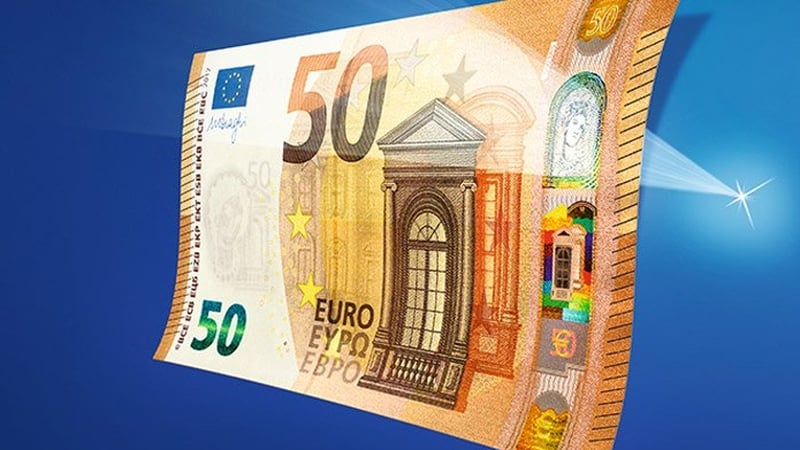
The European Central Bank (ECB) unveiled the new €50 banknote, which will enter into circulation on 4 April 2017. The introduction of the new note marks the latest step in making euro banknotes even more secure.
After the €5, €10 and €20, the €50 is the fourth denomination in the second series of euro banknotes, known as the Europa series.

The €50 is the most widely used euro banknote, accounting for 45% of all banknotes in circulation. There are more €50 banknotes in circulation than the €5, €10 and €20 together.
The new €50 banknote includes a portrait window – a new and innovative feature first used on the Europa series €20. When the banknote is held up to the light, a transparent window near the top of the hologram reveals a portrait of Europa, a figure from Greek mythology, which is visible on both sides of the note.
The same portrait also appears in the watermark. The front of the banknote features an “emerald number”, a shiny number that, when tilted, changes color from emerald green to deep blue and displays an effect of the light that moves up and down. These security features make it easy to check the new €50 for authenticity, using the “feel, look and tilt” method.
Source: Novinite

Πέμπτη 23 Φεβρουαρίου 2017

Post Brexit British tourists exposed to US-style electronic visa scheme

Αποτέλεσμα εικόνας για Post Brexit British tourists exposed to US-style electronic visa scheme

The post Brexit effect continues as The EU is planning to adopt a US-style electronic travel permit scheme. It will be another step closer to create a new administrative hurdle for British tourists.

Immigration minister Robert Goodwill told Parliament the EU was discussing the possibility of introducing a version of America’s Electronic System for Travel Authorisation (ESTA). As per the present rule, foreign travellers have to pay a fee of $14 (£11) after completing  ESTA. it is an automated online system which determines their eligibility to travel to the US.

Mr Goodwill said in a statement that British people are used to the US ESTA scheme and, therefore, it would they view it with interest as to how the European scheme might develop and what similarities, and differences, there may be to the US scheme. He continued that this type of scheme is generally there to help enhance security. To get to know as much as possible about the people who are intending to travel. It is not just flights, it could be people using ferries, or other border crossings into the European Union.

Alan Brown, an SNP member of the European Scrutiny Committee said that an ESTA still takes time and costs money and it is something people have to repeat.

Mr Goodwill however said that it was still too early know if this would apply to British residents, visiting the continent after the UK leaves the EU. At this early stage, it is almost impossible to speculate the effect this might have on British citizens or other third country nationals.

Πέμπτη 2 Φεβρουαρίου 2017

EU to reduce phone and internet roaming charges from June 2017

Αποτέλεσμα εικόνας για EU to reduce phone and internet roaming charges from June 2017

Good news on the way for the domestic European travellers as officials in Brussels confirmed they are on course to put an end to roaming charges.

According to the new agreement, which still needs to be confirmed by the full European Parliament and all member states, making calls, sending texts and using the internet will now cost the same in any country of the EU, starting from 15 June. The caps on wholesale roaming charges – the amount phone operators charge each other when their customers use their phones abroad – were the last piece of the puzzle of a long-running plan needed to end roaming fees. With the removal of the barrier, it will allow to end the roaming charges.

Andrus Ansip, European Commission vice president, said that they are delivering on the promise. However, UK mobile customers will only be able to benefit from the end of roaming charges up until the spring of 2019, when the country is expected to exit the EU. following that period, it will one entirely on the UK Government to strike a deal to prevent British customers from facing steep mobile bills when travelling in what will then be the 27-member-state bloc.

The so-called “bill shock” affects more that 9 million UK mobile phone users who uses their phones while holidaying abroad each year as shown by the research from comparison website uSwitch.

People living in Switzerland, pays one of the highest rates in Europe for data roaming.

Δευτέρα 28 Νοεμβρίου 2016

European Tourism industry welcomes the designation of 2018 as EU-China Year of Tourism


Αποτέλεσμα εικόνας για European Tourism industry welcomes the designation of 2018 as EU-China Year of Tourism
The Network for the European Private Sector in Tourism, which gathers the main travel and tourism trade associations in Europe, sees the designation of 2018 as EU-China Tourism Year as a unique opportunity to increase mutual travel trade between the two regions and stresses the need for a holistic approach.
The EU-China 2018 Year of Tourism was signed by Mr Jean-Claude Juncker, President of the European Commission and Mr Li Keqiang, Premier of the State Council of the People's Republic of China, at the opening of the EU-China summit on 12 July 2016.
NET believes this is an opportunity for both China and Europe to boost tourism flows in both ways. Therefore, tourism promotion alone is not sufficient to make this a success. A holistic approach is needed; looking at facilitating travel, improving connectivity, addressing the specific needs of group tourism, fostering cultural understanding though training and tutorials, help building partnerships between European and Chinese tourism enterprises, overcoming language barriers, etc.
“As China is an increasingly important source market, the EU-China 2018 Year of Tourism is a unique opportunity for Europe to attract more Chinese travellers. The European hospitality industry looks forward to working with the EU institutions to leverage the industry’s efforts” commented Christian de Barrin, CEO of HOTREC.
With a little more than one year to go, NET stresses again the importance of travel facilitation and is urging Member States to adopt the review of the EU visa code, making the visa process more efficient and consumer friendly. An EU-China visa facilitation with Multiple-Entry Visas would also go long ways to easing travel to Europe.
China is the world’s largest travel market in terms of both outbound travel and expenditure. According to ETC, European destinations have welcomed 10,1 million Chinese visitors in 2015, accounting for a share of 13% of all outbound travel from China. At the same time, Europe has sent 4.9 million visitors China, accounting for 19% of the total foreign visitors.

Παρασκευή 13 Μαΐου 2016

Europe's migrant crisis returns


turkey eu flags
In a promise of visa-free travel and a new legitimate scheme for resettling people who have fled Syria, Turkey agreed to clamp down on the people smugglers as well as accepting migrants caught and deported from Greece.
However, EU deal with Turkey over the migrant crisis appears to be in jeopardy as Turkey refused again on Wednesday to make changes to its anti-terrorism laws demanded by Brussels.
EU officials have accused Turkey of using broad anti-terrorism legislation meanwhile Turkish government needs the laws to battle Kurdish militants within the country and threats from Islamic State in neighbor countries Iraq and Syria.
Thomas de Maiziere, the German interior minister said that if Turkey’s President Recep Tayyip Erdogan does not change the definition of terrorism, there will be no visa-free regime.
Turkish minister for EU affairs, Volkan Bozkir said, "It is not possible for us to accept any changes to the counter-terrorism law," following comments by President Tayyip Erdogan who last week said, “the EU lets terrorists (referring to Kurdish activists) put up tents near the Brussels parliament, and provides them with opportunities in the name of democracy, and then you tell us if we change our terrorism laws, the visas will be lifted. We’ll go our way, you go yours.”
The Turkish minister later said in Brussels that his "hopes are getting less and less" for a deal on visa free travel.
There were reports in Germany this week that the EU is working on a “Plan B” in case the deal collapses.
The influx of asylum-seekers has largely abated since Turkey moved to close its borders. However if the deal collapses, EU may need to find another solution for its migrant crisis since Turkey will refuse to accept refuges back.

Δευτέρα 9 Μαΐου 2016

European Commission recommends visa-free travel for Turks


The European Commission recommended today visa-free travel for around 80 million Turkish citizens inside Europe’s Schengen borderless zone. The European Commission has also proposed to the Council of the European Union and the European Parliament to lift the visa requirements for the people of Kosovo.
Turkey has five benchmarks, out of an initial total of 72, to fulfill by the end of June, according to the European Commission, the European Union’s executive body.
First Vice-President Frans Timmermans said: "Turkey has made impressive progress, particularly in recent weeks, on meeting the benchmarks of its visa liberalisation roadmap. There is still work to be done as a matter of urgency but if Turkey sustains the progress made, they can meet the remaining benchmarks."
"There is still work to be done as a matter of urgency but if Turkey sustains the progress made, they can meet the remaining benchmarks," he added.
In order for the visa waiver to take effect from July, the commission’s recommendation must first be approved by the European Parliament and EU member states, which have relied heavily on Turkey to stem the flow of refugees seeking to enter Europe.
EU member states, including the U.K. and Ireland, are not part of the Schengen zone and are therefore exempt from the visa freedom agreement and continue to require Turkish citizens to apply for visa upon a visit.
Visa exemption will apply to the four Schengen-associated countries Iceland, Liechtenstein, Norway and Switzerland, according to the European Commissio