
As cruise deployment steadily returns to Asia, competition between Japan and South Korea to position themselves as regional homeport hubs is once again becoming an important issue for cruise operators. From an industry perspective, however, homeport selection is rarely about tourism appeal alone; it reflects operational economics, network strategy and how efficiently ports support deployment decisions.
Both countries are investing in port infrastructure and improving air connectivity to attract turnaround operations, but cruise lines ultimately evaluate how reliably ports enable smooth operations, cost control and attractive itinerary design rather than simply how modern their facilities appear.
Japan’s position: Strong demand and destination diversity
Japan enters this competition with several structural advantages. It represents one of Asia’s major cruise source markets, supported by strong domestic tourism demand capable of sustaining both regional itineraries and longer voyages. Japan also offers exceptional destination diversity, allowing cruise lines to design itineraries across a wide variety of ports, from Hokkaido in the north to Okinawa in the south. This flexibility enables operators to refresh itineraries and attract repeat customers, a key factor for sustainable deployment.
Japan also benefits from mature transport and tourism infrastructure, with multiple cities able to support turnaround operations through established visitor services and strong aviation access. The Tokyo metropolitan area — served by both Tokyo International Airport (Haneda) and Narita International Airport — offers international connectivity comparable to major Asian hub airports.
In addition, Japan can accommodate cruise ships at more than 20 dedicated cruise terminals nationwide, enabling departures not only from major metropolitan homeports such as Tokyo Port and Yokohama in the Tokyo metropolitan area and Osaka Port and Kobe in the Kansai region, but also from regional ports across the country, allowing demand to be captured from multiple local markets.
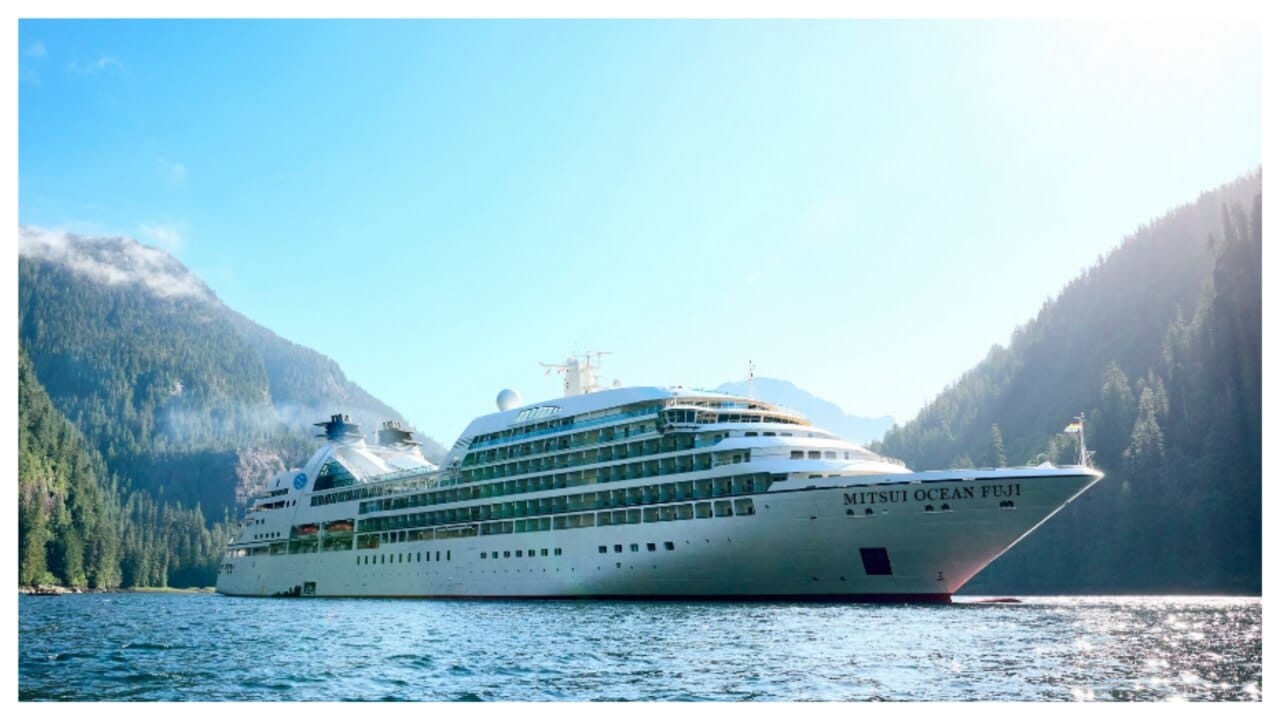
Mitsui Ocean Fuji PHOTO: MITSUI OCEAN CRUISES
Recent investment activity further highlights confidence in long-term cruise demand. MOL Ocean Cruises (Mitsui Ocean Cruises) has expanded its fleet through the acquisition of former Seabourn vessels, with one ship already operating and another scheduled to follow in 2026, while Asuka III, operated by NYK Cruises, entered service in 2025. Additional projects are also underway as Ryobi Holdings and Oriental Land — the operator of Tokyo Disney Resort — plan cruise operations toward the end of the 2020s.
Market data also illustrates Japan’s structural strength. According to Cruise Lines International Association, Japan’s cruise numbers reached around 227,000 in 2024, still below the approximately 297,000 recorded in 2019 but showing steady recovery. Market profiles indicate an aging but loyal customer base, typically favoring itineraries lasting six to seven days, while Japan’s Ministry of Land, Infrastructure, Transport and Tourism has set a target of increasing the cruise population to one million by 2030.
South Korea’s position: Accessibility and gateway connectivity
South Korea approaches the opportunity from a different starting point. While its domestic cruise market remains more limited, the country has focused on improving operational efficiency and aligning national and local policies to support cruise deployment.
In 2023, the government announced its Second Basic Plan for Cruise Industry Development, clarifying strategic roles for major ports: Incheon as a fly-and-cruise homeport serving the Seoul metropolitan market, Busan as an East Asian hub linking Japan, China and Russia, and Jeju as a tourism-focused port of call and semi-homeport, reinforcing Korea’s position as an operational gateway for Northeast Asia.

Jeju's Sunrise Peak is a popular desination for shore excursions PHOTOS: ANNE KALOSH
Cruise figures indicate recovery beyond pre-pandemic levels, with South Korea’s passenger count reaching approximately 55,000 in 2024 compared with around 49,000 in 2019. Demand tends to focus on shorter regional cruises, supported by a slightly younger market profile compared with Japan’s. To further expand domestic demand, the Korean government has also set a target of increasing the country’s cruise count to 100,000 by 2027.
How cruise lines actually decide deployment
Public discussions often frame homeport competition as a contest between destinations, yet cruise deployment decisions are primarily operational and commercial calculations, with cruise lines also needing to account for regional risk considerations.
In Northeast Asia, deployment has repeatedly faced disruptions over the past decade, often occurring at roughly two-year intervals: in 2011 following a major earthquake in Japan and related reputational impacts, in 2013 amid Japan–China tensions, in 2015 during the MERS outbreak in South Korea, in 2017 amid tensions between China and South Korea surrounding the THAAD deployment issue and in 2019 with the emergence of COVID-19, which led to the suspension of cruise operations across the region from 2020 onward.
Recent travel safety notices in China regarding travel to Japan, emerging toward the end of 2025, are being closely monitored by cruise lines. Occurring roughly two years after cruise travel in the region normalized in 2023 following the easing of restrictions linked to earlier THAAD-related tensions, these developments again highlight how deployment in Northeast Asia continues to experience periodic disruptions.
While the duration of the current situation remains uncertain, recent deployment patterns suggest that, at this stage, these developments are being managed primarily as operational adjustments rather than as indications of a structural shift in long-term regional strategy.
What comes next: Competition turning into cooperation?
The evolving dynamics between Japan and South Korea increasingly point toward viewing the two countries as part of a broader, integrated Northeast Asian cruise market rather than as competing homeport hubs. Together, they offer a combination of large and diverse source markets, a wide range of destinations and strong international air connectivity, making the region increasingly attractive for cruise deployment.
Closer cooperation may also emerge through concepts such as dual-homeport cruises and inter-porting operations, enabling passengers to embark or disembark at multiple Northeast Asian ports within a single itinerary, improving operational flexibility while capturing demand across markets. Ultimately, the future of homeport deployment in Northeast Asia may depend less on which country wins the competition and more on how effectively the region adapts to evolving cruise network strategies.
Hirohito Ito may be reached at hirohitoito.jp@gmail.com.

