Emirates’ total passenger and cargo capacity increased by 20% to 57.7 billion ATKMs in 2023-24, recovering to near pre-pandemic levels.
Providing customers with more connection options, Emirates restarted services to Tokyo Haneda, added capacity to 29 destinations, and launched new daily flights to Montréal, Canada. Emirates also inked codeshare and interline agreements with 11 new airline partners, further extending its network’s reach. By 31 March 2024, the Emirates network comprised 151 destinations across six continents, including 10 cities served by its freighter fleet only.
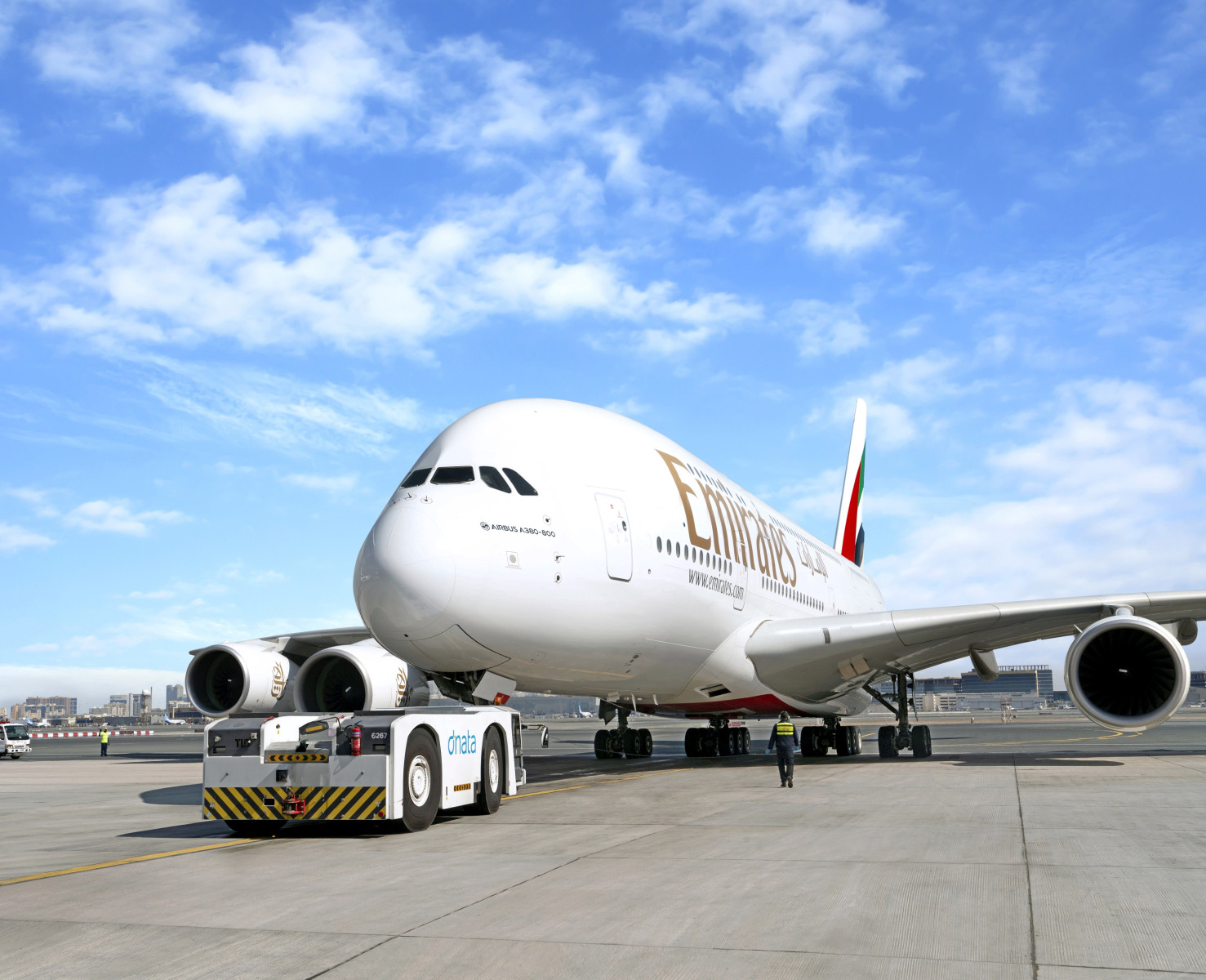
Emirates brought its flagship A380 and popular Premium Economy product to even more cities this year, as 16 more aircraft rolled out of its US$ 2 billion cabin retrofit programme, fully refurbished with the airline’s latest signature products. As of 31 March 2024, the Emirates A380 served 49 destinations, and customers could enjoy Emirates’ Premium Economy experience to and from 15 cities around the world.
Total fleet count at the end of March was 260 units, with an average fleet age of 10.1 years.
Emirates’ order book stands at 310 aircraft, after it announced orders worth US$ 58 billion combined, for 110 additional units of Boeing 777s, 787s, and Airbus A350s at the 2023 Dubai Airshow. These new generation widebody aircraft will replace older jets and support fleet growth, aligning with the airline’s long-standing commitment to fly modern aircraft that are efficient to operate, and able to offer customers the latest inflight comforts and experiences.
With increased capacity deployment and strong demand across markets, Emirates’ total revenue for the financial year increased 13% to AED 121.2 billion (US$ 33.0 billion). Currency fluctuations and devaluations in some of the airline’s major markets, notably the Pakistani Rupee, Egyptian Pound, and Indian Rupee, negatively impacted the airline’s profitability by AED 2.0 billion (US$ 0.6 billion).
The airline saw an operating cash flow of AED 37.6 billion (US$ 10.3 billion) in 2023-24, underpinning its strong commercial results and enabling the airline to grow the business going forward.
Total operating costs increased by 8% from last financial year. Cost of ownership (depreciation and amortisation) and fuel cost were the airline’s two biggest cost components in 2023-24, followed by employee cost. Fuel accounted for 34% of operating costs compared to 36% in 2022-23. The airline’s fuel bill increased slightly to AED 34.2 billion (US$ 9.3 billion) compared to AED 33.7 billion (US$ 9.2 billion) the previous year, with a higher uplift of 24% due to increased flying being balanced by a lower average fuel price (down 18%) including hedging gains.
Driven by the voracious appetite for travel across customer segments, the strength of its global network, and the appeal of its products, the airline hit a new record profit of AED 17.2 billion (US$ 4.7 billion) exceeding last year’s AED 10.6 billion (US$ 2.9 billion) result, with an exceptional profit margin of 14.2%, marking it the best performance in the airline’s history.
Emirates carried 51.9 million passengers (up 19%) in 2023-24, with seat capacity up by 21%. The airline reports a Passenger Seat Factor of 79.9%, rising from 79.5% last year. Passenger yield declined 2% to 36.6 fils (10.0 US cents) per Revenue Passenger Kilometre (RPKM), due to a change in cabin and route mix, fares and currency.
Emirates continued to invest in delivering ever better customer experiences. During the year, it invested AED 30 million to uplift its dedicated Emirates Lounges with refreshed facilities reopening to serve premium customers and frequent flyers in Brisbane, Dusseldorf, Frankfurt, Hamburg, Hong Kong, Johannesburg, Manchester and Munich. Emirates restored its signature Chauffeur Drive service to 82 cities across its network and introduced this complimentary offering to premium customers in Indonesia, Morocco, and Turkey.
The airline also implemented a slew of inflight enhancements from menus and amenities to entertainment content, key amongst which, were the launch of complimentary loungewear and meal pre-ordering in Business Class.
Emirates SkyCargo reaffirmed its position in global air logistics and trade, carrying 2.2 million tonnes of goods around the world in 2023-24, up 18% from the previous year, as increased passenger operations expanded available cargo capacity, and the leasing of three 747 freighters during the year unlocked immediate capacity to serve demand on busy routes. This reflects the high customer demand for its specialist logistics solutions, the reach and connectivity of Emirates’ global network, Dubai’s world-class sea-air hub capabilities, and the fruits of Emirates SkyCargo’s ongoing investments in digital technology, infrastructure, and products.
Despite continued challenges in global logistics, the cargo division reported a solid revenue of AED 13.6 billion (US$ 3.7 billion), contributing 11% to the airline’s total revenue. Cargo yield per Freight Tonne Kilometre (FTKM) declined by 32%, returning to pre-pandemic marketplace levels.
During the year, it launched Emirates Vital and Emirates Medical Devices, two purpose-built cargo solutions to serve the unique requirements of the life sciences and healthcare sector. It also launched Emirates Delivers in Kuwait to connect shoppers there with e-commerce brands in the UK, the US, and the UAE. Emirates Delivers is poised to scale significantly in the coming years, focussing on markets underserved by business-to-consumer delivery solutions.
At the end of 2023-24, Emirates’ SkyCargo’s total freighter fleet stood at 11 Boeing 777Fs. The cargo division expects delivery of its 5 additional Boeing 777Fs on order from mid-2024.
Under Emirates Group companies and subsidiaries, Emirates Flight Catering and MMI/Emirates Leisure Retail (ELR) reported notable results in 2023-24.
Emirates Flight Catering hit record revenues of AED 970 million (US$ 264 million) from its external customers, driven by traffic growth at Dubai’s airports. It supplied 76.9 million meals to airline customers, 19% more than the previous year, and saw rising demand for its other ancillary businesses including at Linencraft, its laundry facility which primarily serves airline and hospitality clients.
MMI/ELR revenue surged 18% to AED 2.9 billion (US$ 796 million), as it expanded UAE operations to meet growing wholesale and retail demand driven by the booming tourism sector. ELR recorded record sales growth globally, with strong contributions from its key markets of the UAE, the US and Australia.
Emirates’ hotels portfolio revenue over last year decreased by 2% to AED 660 million (US$ 180 million), reflecting the temporary closure of its Wolgan Valley resort in Australia.
With another year of strong performance, Emirates continued to meet all its regular aircraft-related payment obligations and repaid an additional AED 2.2 billion (US$ 596 million) from the AED 17.5 billion (US$ 4.8 billion) borrowed during the COVID-19 crisis. This substantially reduced its overall outstanding debt profile and places the airline on a strong foundation for financing for its future growth and the new fleet acquisition programme.
In response to the challenges posed by volatile fuel markets during the financial year, Emirates deployed simple forwards and options across different products such as brent and jet fuel to reduce current year costs as well as secure significant future hedging volumes. In addition, it largely mitigated the impact of the higher interest rate regime on the results with effective management of the net exposure. Emirates continued with its balanced approach to managing the foreign exchange rate risk through use of currency options, forward contracts, and natural hedges. The methodical approach allowed improved predictability of its cashflows against volatile market shifts, thereby enhancing financial stability.
Emirates closed the financial year with its highest-ever level of cash assets at AED 42.9 billion (US$ 11.7 billion), 15% higher compared to 31 March 2023.
dnata performance