The summit brought together public- and private-sector stakeholders to
examine how tourism can continue to serve as a stabilising force for Caribbean
economies, particularly as climate-related disruptions become more frequent and
severe. Discussions highlighted the need for coordinated action between
governments, tourism authorities and cruise operators to strengthen
preparedness, accelerate recovery and ensure shared value for local
communities.
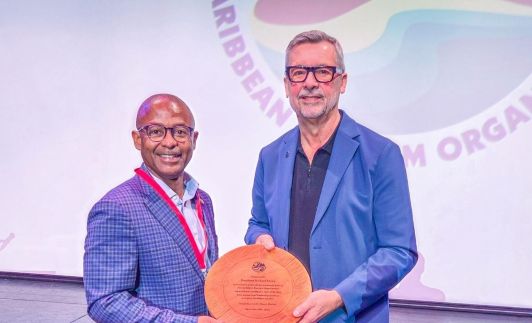
Michael Bayley, President and CEO of Royal Caribbean International, outlined his company’s immediate response following Hurricane Melissa. This included the delivery of more than 100 pallets of essential supplies, generators, food and water to Jamaica’s port of Falmouth, collaboration with partners to support distribution in severely affected areas, and assistance in providing meals to impacted communities.
In a candid discussion with Dona Regis-Prosper,
Secretary-General & CEO of the Caribbean Tourism Organization,
Bayley emphasised Royal Caribbean’s long-standing connection to the region. “I
think over the years we’ve always tried to support the Caribbean communities.
Especially in times of crisis, we answer the phone, and we try our best,” he
said.
Ian Gooding-Edghill, Chairman of
the Caribbean Tourism Organization and Barbados’ Minister of Tourism and
International Transport, expressed appreciation to Royal Caribbean and regional
partners for their compassion and support to Jamaica and Haiti following the
hurricane. He underlined the importance of closer collaboration across sectors
and borders to address shared challenges.
“The future of Caribbean tourism depends on our ability to reimagine
together — to innovate, to collaborate and to believe in the boundless potential
of our region,” Gooding-Edghill said,
highlighting the need for data-driven policy, improved connectivity and growth
models that prioritise benefits for local communities.
 |
| Caribbean tourism leaders on board Icon of the Seas with Royal Caribbean executives |
Bayley also called for comprehensive “master planning” to help destinations
manage sustainable tourism development effectively. He pointed to opportunities
for deeper collaboration between cruise lines and destinations to expand
employment pathways for Caribbean youth. This includes engagement with regional
labour ministers and industry leaders to address long-standing barriers to
workforce participation across the tourism value chain.
Sustainability featured prominently in the discussions, with Bayley outlining Royal Caribbean Group’s focus on environmental
technologies, shore power systems and resilient port infrastructure as part of
a forward-looking approach to responsible growth.
Despite the challenges posed by Hurricane Melissa, the Caribbean welcomed millions
of cruise visitors in 2025, reinforcing the sector’s critical contribution to
regional economies and employment. The summit delivered a clear message that,
as storms grow fiercer and more frequent, resilience must be embedded into
every tourism strategy, investment and partnership.
While the event included lighter cultural moments, such as a Wizard of Oz
performance and an appearance by the ship’s “Chief Dog Officer,” Rover, the
overall tone remained purposeful. Participants echoed a call for “all hands on
deck,” reinforcing the idea that tourism is a shared responsibility and a
central pillar of the Caribbean’s recovery, resilience and future prosperity
Tags: Ian Gooding-Edghill, Caribbean Tourism Organization Michael Bayley, Royal Caribbean International

