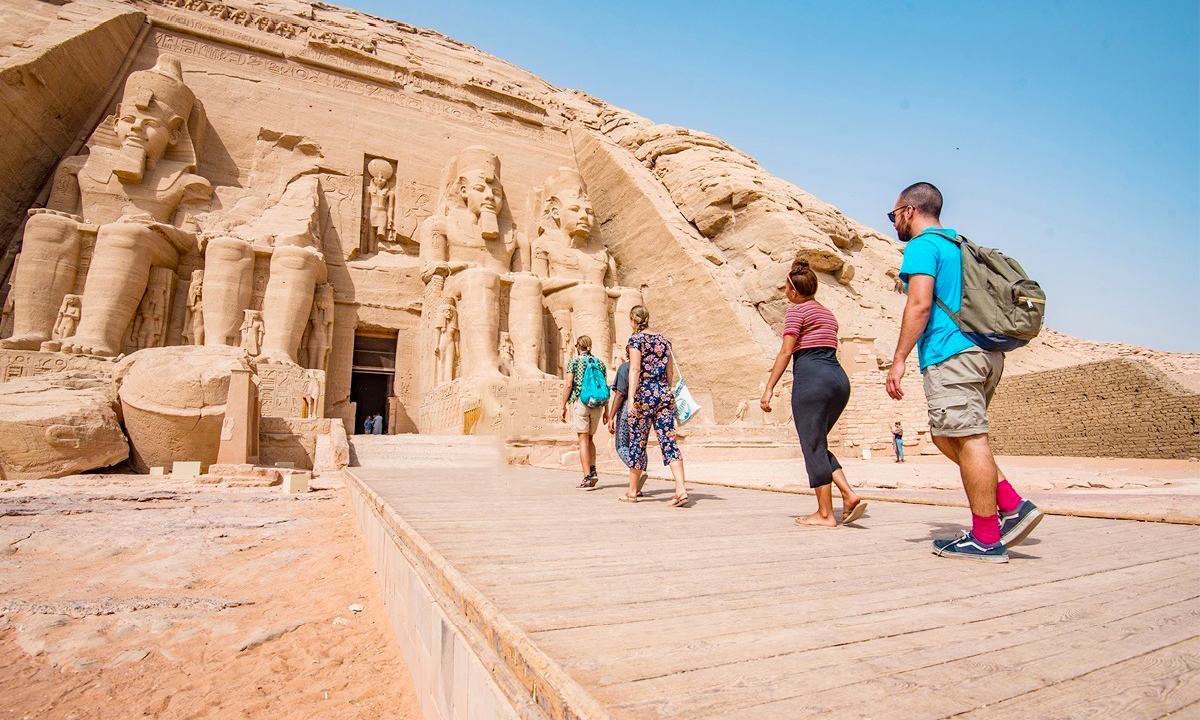
The increase made Egypt one of the strongest-performing tourism destinations globally during the period and the leading performer in the Middle East, where international tourist arrivals declined by 14% year on year.
According to data reported by UN Tourism, international tourist arrivals worldwide increased by 2% during the first quarter, reaching approximately 307 million travellers, around six million more than in the corresponding period of 2025.
The Middle East was the only global region to record a decline in international arrivals during the quarter. The regional decrease was associated with geopolitical developments that disrupted travel patterns and affected air connectivity and traveller confidence.
Egypt’s performance contrasted with the regional trend. International arrivals to the country increased by 16%, while tourism revenues also rose by 8% during January-March, according to the figures cited from the UN Tourism report.
UN Tourism reported that international tourism maintained stronger momentum during January and February, when global arrivals increased by a cumulative 2.5%. Growth slowed in March to approximately 0.4% as developments in the Middle East affected international travel.
A survey of the UN Tourism Panel of Tourism Experts identified the conflict in the Middle East as the leading challenge for international tourism in 2026. Rising transport and accommodation costs and wider economic pressures were also identified among the main challenges. Nearly two-thirds of the experts surveyed said geopolitical developments were negatively affecting tourism demand in their destinations.
By region, Europe and Africa each recorded 4% growth in international arrivals during the first quarter. Asia and the Pacific increased by 3%, while the Americas recorded growth of 2%. The Middle East recorded the 14% decline, with several Gulf destinations registering significant decreases.
The UN Tourism data also showed that Egypt’s growth followed a strong performance by the wider Middle East tourism market in 2025. International arrivals in the region were approximately 40% above 2019 levels last year, before the deterioration in regional conditions affected travel demand in early 2026.
More recent Egyptian government figures indicate that the country’s tourism growth continued beyond the first quarter. Data released by the Egyptian Cabinet in May 2026 showed that international tourist arrivals reached 6.1 million during the first four months of the year, compared with 5.7 million during the same period in 2025, representing an annual increase of 7%.
Egypt reported an even stronger increase during 2025, when tourist arrivals rose by 20.5% compared with 2024, according to government figures cited by Egyptian media.
The Egyptian government has set a target of attracting 30 million tourists annually by 2030. According to the latest government information cited in the reporting, visitors to Egypt come from 179 countries, while tourism authorities are conducting market-specific promotional activities.
The country’s tourism offer includes cultural attractions such as the Grand Egyptian Museum, which officially opened in November 2025, as well as the Giza Pyramids, Nile cruises between Luxor and Aswan, Alexandria’s Mediterranean coastline and Red Sea diving destinations.
The latest UN Tourism figures also indicated that global tourism continued to face uncertainty during 2026. The organisation warned that continued conflict in the Middle East could reduce its initial forecast for global international-arrival growth by between 1 and 2 percentage points, depending on the duration and geographical scope of the disruption.
UN Tourism’s Confidence Index stood at 105 points for the May-August 2026 period, compared with 117 points for January-April, indicating a lower level of confidence among tourism experts as the year progressed.
For Egypt, the Q1 figures and subsequent government data show continued growth in international visitor numbers during a period when tourism activity across much of the wider Middle East was affected by geopolitical disruption.
Tags: UN Tourism Egypt